
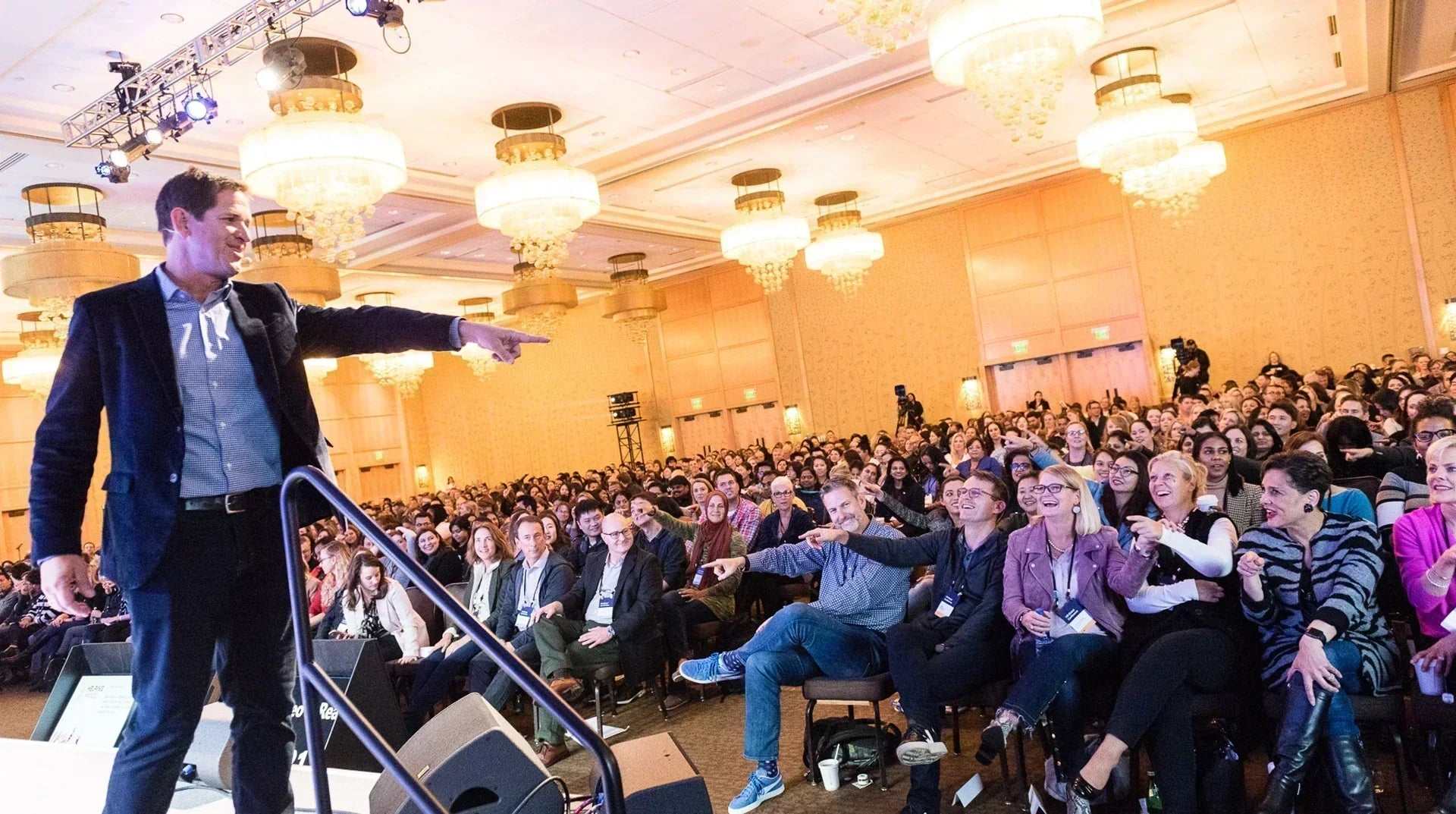
The world of work in 2026 is almost unrecognizable compared to the world we inhabited in 2017. Back then, technology felt exciting, manageable, and—most importantly—optional. Today, it’s everywhere. It’s faster, more complex, and more deeply woven into every corner of our lives. The pace of change has outpaced the pace of understanding, and most people are quietly trying to keep their heads above water. This new reality is exactly why moment‑driven leadership has become essential for modern teams.
This shift hasn’t just changed how we work. It has fundamentally reshaped how we lead, how we connect, and what culture even means inside an organization.
And the generation now stepping into leadership—the 30–40‑year‑olds who grew up in the analog world and matured in the digital one—are carrying the weight of this transition. They’re expected to be fluent in technology, emotionally intelligent, culturally aware, and endlessly adaptable. They’re expected to build culture, drive performance, and create connection in a world where connection is harder than ever.
This blog explores how people are navigating this new reality, what company culture means in 2026, how modern leaders are trying to connect with their teams, and what organizations can do to support them. Most importantly, it explores why moment‑driven leadership is becoming the new foundation of culture—and how companies can help leaders create those moments with confidence.
Most People Aren’t Keeping Up With Technology—They’re Surviving It
Let’s start with the truth: Most people are not “keeping up” with technology. They’re surviving it.
The pace of innovation has accelerated to the point where even tech‑savvy professionals feel behind. New tools appear weekly. AI reshapes workflows monthly. Entire industries shift direction annually. And the average employee is expected to adapt instantly.
But here’s the part we don’t talk about enough:
People aren’t overwhelmed because they’re incapable. They’re overwhelmed because the world is moving faster than any human nervous system was designed to process.
So they cope in three ways:
1. Selective Mastery
People learn only what they absolutely need to do their jobs. Everything else gets ignored. This is why “all‑in‑one platforms” often fail—people don’t want more features; they want fewer decisions.
2. Social Learning
Instead of reading manuals or attending formal trainings, people learn from peers, group chats, short videos, and quick demos. Knowledge is now communal, not hierarchical.
3. Emotional Filtering
People adopt technology based on how it feels, not how it functions. If a tool feels intuitive, empowering, or safe, they’ll use it. If it feels confusing or overwhelming, they’ll avoid it—even if it’s objectively better.
This emotional filtering shapes how employees engage with everything: tools, communication, culture, and even moment‑driven leadership.
What Company Culture Means in 2026
For decades, culture was defined by perks, office design, values posters, and leadership offsites. But the hybrid era shattered that model. Culture can no longer be tied to a physical space or a set of slogans.
In 2026, culture has distilled into three essential elements:
1. Psychological Safety
People want to feel safe speaking honestly. They want to know they won’t be punished for asking questions, raising concerns, or admitting uncertainty. This is the foundation of trust—and trust is the foundation of culture.
2. Shared Moments
Not meetings. Not memos. Moments. The experiences people remember, talk about, and bond over. These moments create emotional glue—the sense of “we” that makes a team feel like a team.
3. Purpose That Feels Real
Employees want to know:
Why does this company matter?
Why does my work matter?
Why should I give my energy to this place?
Purpose is no longer a poster on the wall. It’s a lived experience.
Culture, in other words, is no longer a vibe. It’s a sequence of intentional experiences that create belonging—exactly what moment‑driven leadership is designed to deliver.
The 30–40 Year Old Leader: The Most Pressured Generation in the Workplace
The leaders now in their 30s and 40s are navigating a unique and often invisible pressure. They’re old enough to remember a workplace without constant digital noise, but young enough to feel the expectation to be fluent in every new tool, trend, and cultural shift.
They’re the bridge generation—translating between older leaders who want stability and younger employees who want flexibility, purpose, and authenticity.
Here’s what they’re facing:
- They’re expected to build culture without a playbook.
- They’re expected to be emotionally intelligent at all times.
- They’re expected to lead hybrid teams with consistency.
- They’re expected to be tech‑savvy without being overwhelmed.
- They’re expected to create meaningful experiences.
This is a heavy load. And most leaders are quietly asking the same question:
“How do I create connection when everything feels fragmented?”
This is the exact question moment‑driven leadership answers.
How Modern Leaders Are Trying to Connect With Their Teams
Despite the pressure, leaders are finding creative ways to build connection. The most effective strategies share a common theme: they’re small, human, and consistent.
- Micro‑Rituals: Weekly wins, gratitude rounds, five‑minute check‑ins.
- Shared Learning: Book clubs, skill swaps, lunch‑and‑learns.
- Hybrid‑Friendly Bonding: Virtual challenges, asynchronous celebrations, digital storytelling.
- Authenticity Over Polish: Leaders are dropping the corporate mask and being real.
But one strategy stands above the rest—because it taps into the deepest human need: purpose.
Purpose‑Driven Experiences
Purpose‑driven experiences have become one of the most powerful ways leaders create connection in 2026. Employees aren’t just looking for team activities—they’re looking for meaning. They want to feel that their work contributes to something bigger than the next deadline or quarterly target.
This is where Odyssey stands apart.
For more than 30 years, Odyssey has been designing experiences that don’t just bring teams together—they change the way people see themselves, their colleagues, and their impact on the world. These aren’t “nice‑to‑have” moments. They’re identity‑shaping moments.
When leaders choose an Odyssey experience, they’re giving their team something deeper than collaboration. They’re giving them:
- A shared purpose. Building prosthetic hands, bikes, skateboards—real tools that change real lives.
- A story worth telling. Teams remember the moment the hand opened for the first time or the moment they saw the child’s bike.
- A sense of belonging. Purpose creates unity faster than any icebreaker ever could.
- A leader who “gets it.” Bringing Odyssey into a meeting signals: “I care about who we are, not just what we do.”
Purpose‑driven experiences aren’t a trend. They’re the new foundation of culture. And Odyssey is the partner that helps leaders bring that purpose to life in a way that feels real, human, and unforgettable.
This is moment‑driven leadership in action.
Why Moment‑Driven Leadership Is the Future
In a world where attention is fragmented and connection is rare, moments have become the most powerful tool leaders have.
Moments:
- create emotional memory
- build trust
- strengthen belonging
- reinforce purpose
- shape culture
A single shared experience can do more for culture than a year of meetings.
This is why moment‑driven leadership is emerging as the new model for 2026 and beyond. Leaders don’t need to be culture architects. They don’t need to design elaborate programs. They simply need to create the moments that make culture real.
And this is where companies like Odyssey have a unique opportunity.
How Organizations Can Support Leaders (and Why They’ll Buy Your Products)
If you want leaders to buy your products, you don’t sell them “team building.”
You sell them leadership relief.
You sell them:
- “I can give my team a meaningful moment without having to create it myself.”
- “This makes me look like a leader who cares.”
- “This is a culture‑building shortcut I can trust.”
- “This helps my team feel connected in a disconnected world.”
- “This aligns with the purpose‑driven culture my employees expect.”
When you position your offerings as moment‑creation tools—not activities—you meet leaders exactly where they are: overwhelmed, hopeful, and eager to create something meaningful.
According to a recent report from the Harvard Business Review, today’s managers are experiencing the highest levels of workplace complexity in decades, especially around hybrid leadership and emotional labor: https://hbr.org
The Bottom Line: Leaders Don’t Need More Tools—They Need More Moments
The world is noisier. Technology is faster. Culture is harder to define. But people still crave the same things they always have:
Connection.
Belonging.
Purpose.
Meaning.
Leaders don’t need to invent culture. They just need to create the moments that make culture real.
And the organizations that help them do that—simply, ethically, and powerfully—will win the trust of the modern workforce.
Share:
Workplace Culture is Fading - Here’s How a Few Dollars Can Save It
Service Leadership Culture: Why Humans (and Organizations) Thrive When They Serve