
For decades, companies have called asking for “team building.” They wanted stronger collaboration, better communication, more trust, more cohesion. But over the years, we’ve learned something essential: you can’t build a great team without first building the individuals within it — and that’s why Life Cycles was designed as a return on inspiration team building experience from the very beginning.
That belief is at the heart of Life Cycles — a purpose‑driven experience where people build brand‑new bicycles for children in their community. It’s hands‑on, emotional, energizing, and deeply human. And it works because it taps into something far more powerful than traditional team activities: Return on Inspiration Team Building, a mindset that elevates individuals so teams can rise with them.
In a world where organizations measure everything — productivity, engagement, retention, ROI — we believe there’s another metric that matters just as much: how inspired people feel when they show up to work. Inspired people perform at their highest level. Inspired people collaborate more naturally. Inspired people care.
Life Cycles is built around that truth.
Why Inspiration Matters More Than Ever
Most people don’t wake up wanting to be average. They want to contribute. They want to feel connected. They want to know their work has purpose. But in the rush of deadlines, meetings, and pressure, that sense of purpose can fade.
Life Cycles brings it back.
We start by asking a simple question:
What inspires you?
Not just the return on investment — but the Return on Inspiration. What drives you? What brings out your best? What makes you feel like your work matters?
When people reconnect to those answers, everything changes. They become more open, more curious, more willing to collaborate. They shift from “checking the box” to showing up with intention.
Individual Building Before Team Building
Life Cycles reframes the entire concept of team development. Instead of focusing on the team as a unit, we focus on the individuals who make up that team.
We ask participants to approach the experience with humility and curiosity — the two qualities that define a true learner. We remind them that the bikes they’re building will be ridden by real children. And we challenge them to think about what matters more: beating the team next to them, or ensuring the quality is there for the child who will receive the bike.
This shift in mindset is powerful. It slows people down. It encourages them to share skills, knowledge, and resources. It transforms competition into collaboration.
When someone in the room has a skill the group needs, should they share it?
Yes.
When someone notices a detail that could improve the bike’s quality, should they speak up?
Absolutely.
We ask teams to dial back the pace and dial up the craftsmanship, the communication, and the care. And in doing so, they begin to see each other differently — not as coworkers, but as humans with strengths, insights, and contributions that matter.
The Missing Ingredient: The Customer
Every business exists to serve someone. But in the day‑to‑day grind, it’s easy to lose sight of the customer — the real human being on the other side of the work.
Life Cycles brings that customer into the room.
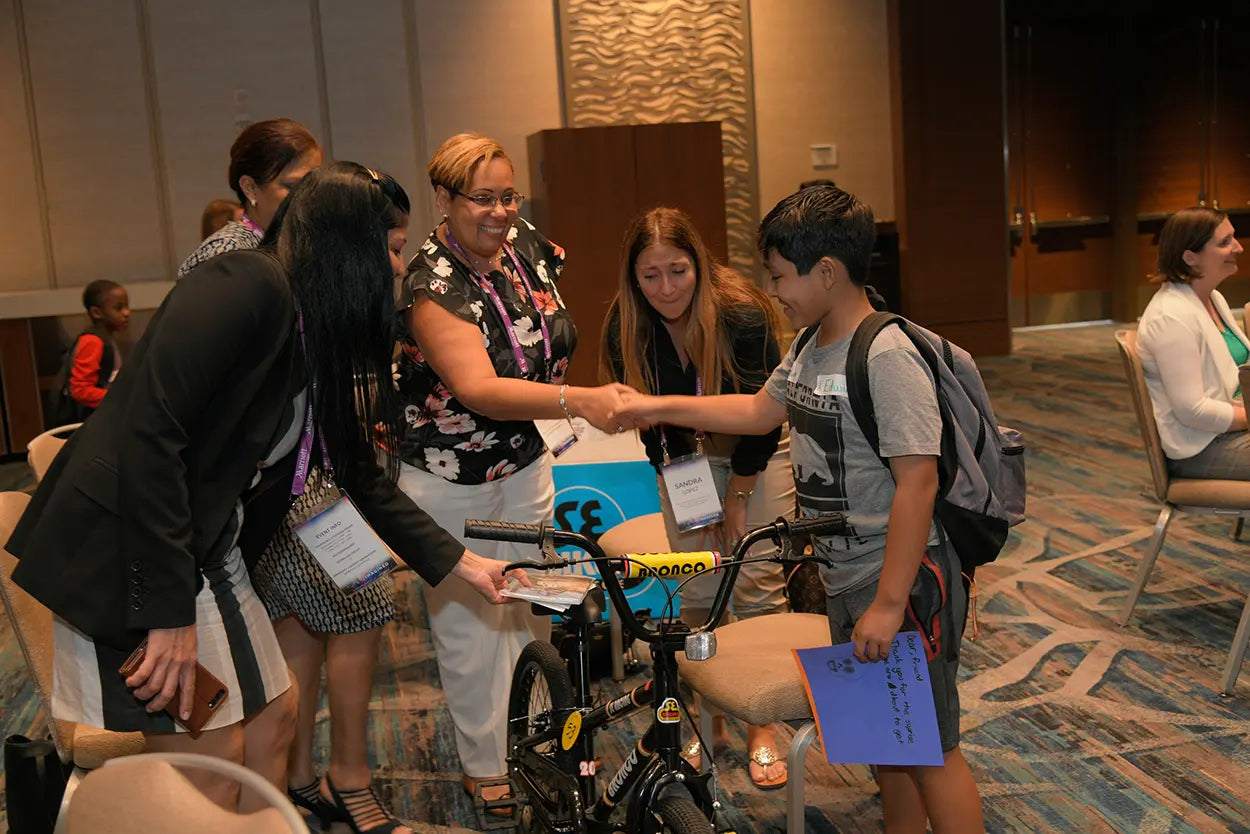
After teams finish building the bikes, we introduce the children who will receive them. The moment they walk in, everything shifts. The room gets quiet. Eyes widen. People stand a little taller. The purpose becomes real.
These aren’t theoretical customers. These are kids who will ride these bikes to school, to the park, to their friend’s house. For some, it’s their very first bike. For others, it’s a symbol of being seen, supported, and cared for.
The emotional impact is immediate and unforgettable.
What Participants Say
Participants often arrive wondering, Why are we building bikes? What does this have to do with being lawyers, engineers, or a tech team?
By the end, the answer is clear.
They talk about slowing down.
They talk about showing more grace.
They talk about remembering that everyone carries unseen challenges.
They talk about reconnecting to purpose.
One participant described the experience as “food for the soul.”
Another said they came in unsure and left with “a heart full of good stuff.”
These reflections aren’t accidental — they’re the result of a carefully designed experience that blends purpose, collaboration, and community impact.
The Impact on the Children
For the kids, the impact is just as real. They receive a brand‑new bike — often their first. They feel celebrated. They feel supported. They feel joy.
One child said he planned to ride his new bike everywhere — even mountain biking.
The room erupts in cheers. The countdown hits “1, 2, 3!” The energy is electric. And in that moment, teams understand what they’ve actually built.
Not just a bike.
Not just a team.
But a story — one they created together.
Why Life Cycles and Return on Inspiration Team Building Works
Life Cycles works because it aligns three powerful forces:
- Purpose — People reconnect to why their work matters.
- Collaboration — Teams practice real, meaningful teamwork.
- Impact — The experience ends with a tangible gift to the community.
This combination creates lasting change. It builds individuals who are more inspired, more connected, and more capable of building great teams.
Learn More About Life Cycles
If your organization is ready for a team experience that transforms people — not just entertains them — Life Cycles is ready for you.
Explore the full program here:
🔗 Life Cycles Leadership Skills Training | Transform Through Experience – Odyssey Teams
Watch the Life Cycles video on YouTube:
🔗 https://youtu.be/SBh6tnbY-XA
Share:
Beyond the Happy Hour: Choosing Purpose-Driven Team Building That Actually Sticks
The Koozie Constraint: Scaling Experiential Empathy in Modern Team Building