
How to Talk to Kids During a Board Meeting: Connecting, Communicating & Building Together
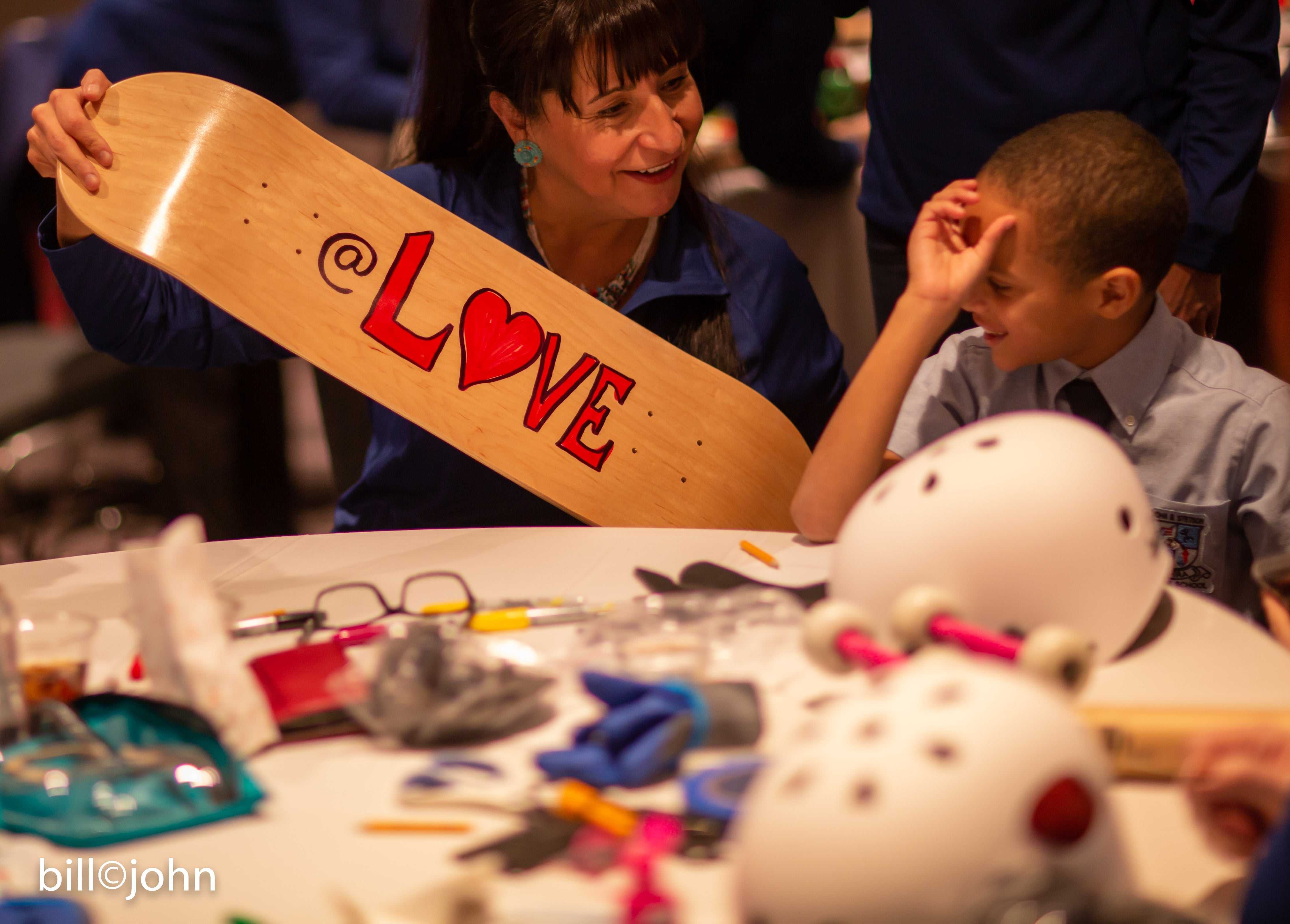
Working with kids can feel intimidating—especially when it happens in a professional setting. That’s one of the unique features of The Board Meeting, a give-back experience where participants build skateboards with youth, mentor them, and ultimately gift the completed board to the child they’ve worked with.
For many adults, especially those without children of their own, the idea of guiding, teaching, and collaborating with a young person can feel overwhelming. But that’s also where the magic happens—learning to listen, communicate, and adapt is what turns The Board Meeting into a powerful team-building experience.
Here’s how to make the interaction smooth, meaningful, and unforgettable.
Why Talking to Kids Feels Challenging
Michael Thompson, Ph.D., co-author of Raising Cain, explains the core issue:
“The basic challenge is that adults very often speak without understanding how children receive the message.”
Adults assume kids understand instructions the way grown-ups do—then feel confused when things don’t go as planned.
The secret to talking to kids well?
Treat them like you would any other person.
No baby talk. No oversimplifying. No talking down. Kids appreciate respect and respond to it.
Step One: Help Them Relax
Before diving into the skateboard kit, take a few minutes to help the child feel comfortable.
Tips to help kids open up:
-
Ask simple, open-ended questions about things they enjoy.
-
Topics like video games, pets, or hobbies work instantly.
-
Sit beside them or bend down to their eye level.
-
Speak calmly—no loud volume or rushed pace.
-
Keep your hands to yourself unless invited.
And remember—if a difficult topic comes up, defer to a chaperone or simply say, “I’m not sure.”
Above all, avoid disciplining the child yourself. Your role is to guide and encourage—not correct.
If you’re truly stuck on how to start the interaction, try sportscasting:
“Hey, you grabbed the screwdriver!”
“You found the orange marker!”
“Nice, you’re already organizing your tools.”
Narrating what the child is doing breaks the ice and builds trust quickly.
Step Two: Dive Into the Board Meeting Kit Together
Once the child feels comfortable, it’s time to start building the skateboard.
This is where the team’s instincts may drift toward doing the work themselves—but resist that. The event is about building with the child, not around them.
Let the Child Lead
The best approach is to put the youth in charge. After all, it’s going to be their skateboard.
Let them:
-
Assign tasks
-
Read the instructions
-
Decide on design elements
-
Choose colors and decorations
Your team can guide the decision-making, but let the child be the leader.
And yes—they should get their hands on every part of the assembly.
Children need to feel like true members of the team, not just spectators waiting for a reward.
If the child hesitates, offer help gently. Older kids often feel shy about asking.
Step Three: Communicate Clearly and Check Understanding
As you work, communication is everything.
-
Ask specific questions.
-
Repeat back what the child suggests to confirm you heard correctly.
-
Keep the tone encouraging and patient.
-
Celebrate small wins—every tightened bolt, sticker placed, or instruction read out loud builds confidence.
This is where the team-building magic happens: collaboration, empathy, problem-solving, mentorship, and leadership develop naturally.
The Final Moment: Celebrate and Encourage Them
When the skateboard is finished, thank the child for leading the team.
A few great final questions:
-
“What’s the first thing you’re going to do with your skateboard?”
-
“Want to take it for a test ride?”
-
“What was your favorite part of building it today?”
Then comes the best part of the entire Board Meeting—the moment the child straps on their pads, puts on the helmet, and rides their custom-built skateboard for the first time. It’s a moment filled with pride, excitement, and often a spark of confidence that wasn’t there at the beginning.
You may even walk away feeling like a superhero in somebody’s eyes.
Share:
Life Cycles Bike Maintenance Tips
The Playhouse Challenge Accepted