From Team Building to Global Impact: How Build-A-Hand Helped Deliver 302 Prosthetic Hands in July 2026
A team-building experience can strengthen communication, deepen trust, and bring colleagues closer together. With Build-A-Hand, it can also create a tangible result that continues making an impact long after the event ends. Odyssey Teams’ Build-A-Hand program invites participants to work together to assemble and help fund functional prosthetic hands that are later distributed at no cost to recipients through the LN-4 Hand Project. The July 2026 distribution report shows what that shared effort can become: 302 hands delivered in the Philippines, Ethiopia, and Zambia, bringing the cumulative total to 91,099 hands distributed.
Those numbers matter, but the story begins before any hand reaches a recipient. It begins when a team gathers around a table, receives a set of components, and accepts a meaningful challenge: build something together that will ultimately serve another person.
That is what makes Build-A-Hand different from a conventional team activity. The collaboration is real, the quality of the work matters, and the finished product has a purpose far beyond the room.
Build-A-Hand Turns Team Development Into Human Impact
Organizations invest in team building for many reasons. Some want to improve communication. Others are bringing together colleagues who work across departments, locations, or time zones. Leadership teams may be navigating change, while newly formed groups may need to build trust quickly. Conferences and company meetings often need an experience that can unite a large group around a common purpose.
Build-A-Hand supports those goals while connecting the team to a larger humanitarian mission.
Participants are not completing a hypothetical exercise that will be forgotten at the end of the session. They are assembling prosthetic hands intended for real recipients. Every step calls for cooperation, communication, attention to detail, and shared accountability.
That changes the way people engage.
When participants understand that another person may eventually use the hand they are building, the activity carries greater weight. Team members tend to slow down, ask better questions, help one another, and focus more carefully on the result. The team-building lessons emerge naturally because the mission gives those lessons meaning.
Through Build-A-Hand, teamwork becomes more than a topic for discussion. It becomes a practical act of service.

How the Build-A-Hand Experience Works
During a Build-A-Hand event, participants work together to assemble an LN-4 prosthetic hand. The process is structured, but it is not designed to be completed by one person acting alone. Success depends on the group’s ability to organize, communicate, share responsibility, and adapt as the work progresses.
Some participants may naturally focus on instructions. Others may organize components, manage the sequence, notice small details, or keep the group moving. The activity makes different strengths visible and gives people a chance to see how those strengths contribute to a shared result.
The experience also opens the door to valuable reflection:
- How did we make decisions?
- Did everyone have a meaningful role?
- How did we respond when something was unclear?
- Who helped the group stay focused?
- What did we learn about leadership, trust, and accountability?
These are familiar workplace themes, but Build-A-Hand makes them concrete. The completed hand becomes evidence of what the group achieved together.
Participation also helps fund the hands so they can continue through the LN-4 Hand Project’s distribution process. The hands are ultimately provided at no cost to recipients through the broader network that carries the mission forward.
The event may take place during a company meeting, conference, leadership gathering, or team retreat, but its impact continues well beyond that day.

July 2026: What Teamwork Made Possible
The July 2026 LN4 Hand Distribution Report provides a powerful example of where the work can lead.
During the month:
- 150 hands were distributed in the Philippines on July 10.
- 150 hands were distributed in Ethiopia on July 10.
- 2 hands were distributed in Zambia on July 16.
- 302 hands were distributed in total.
- The cumulative total reached 91,099 LN4 hands distributed.
The distribution figures are approximate and may shift based on changing global and partner conditions. Even so, they offer an important snapshot of the scale and reach of the mission.
For organizations that have participated in Build-A-Hand, a report like this helps complete the story. A team may remember the event as an energizing moment of collaboration, but the finished hands do not remain in the meeting room. They enter a larger process that connects corporate teams with the LN-4 Hand Project, distribution partners, and recipients around the world.
July’s 302 hands represent the combined effort of many people: participants who assembled and helped fund the hands, Odyssey Teams facilitators who guided the experience, the people who carried the hands through the next stages, and the recipients who ultimately decided how the hands could fit into their lives.

Every Hand Begins With Collaboration
A prosthetic hand starts as a collection of individual pieces. No single component can fulfill the purpose of the finished device on its own. The parts must be assembled correctly and in relationship to one another.
The same is true of a team.
A group may include people with different roles, expertise, personalities, and working styles. Those differences can become a source of friction, or they can become a source of strength. What matters is how people communicate, coordinate, and align around the outcome.
Build-A-Hand gives teams a physical experience of that principle. Each participant contributes something, but the result only emerges when those contributions are connected.
The exercise often reveals patterns that are easy to miss during an ordinary workday. One person may step into leadership immediately. Another may quietly notice a critical detail. Someone may create order when the group feels uncertain. Someone else may make sure every voice is heard.
There is no single “best” role. The value comes from recognizing how the roles work together.
That is one reason Build-A-Hand can be effective for teams at many stages of development. Established groups can see familiar dynamics in a new setting. New teams can build trust around a shared task. Cross-functional groups can practice working beyond their usual responsibilities. Leaders can observe how purpose, clarity, and inclusion affect performance.
The hand is the product, but the team is also learning how it builds.

Why Purpose Makes Team Building More Memorable
Many employees have participated in team-building activities before. Some were fun in the moment but quickly forgotten. Others may have felt disconnected from the organization’s values or the realities of the team’s work.
Purpose changes that.
Build-A-Hand gives participants a reason to care about the outcome beyond completing the exercise. The team is not simply trying to finish first or earn points. It is working carefully because the result is intended to become a useful tool for another person.
That sense of purpose can create a different level of attention and emotional investment. It can also make the event more inclusive. Participants can contribute through organization, patience, problem-solving, encouragement, observation, communication, or hands-on work.
The experience reinforces an important lesson: meaningful results rarely come from one kind of talent. They come from people using different strengths in service of a shared goal.
Build-A-Hand also gives organizations a way to make values visible. Collaboration, quality, responsibility, empathy, and service are no longer words on a slide. They are behaviors the team must practice to complete the hand.
From Odyssey Teams to the LN-4 Hand Project
Odyssey Teams facilitates the Build-A-Hand experience, helping organizations combine team development with a meaningful social-impact activity. The LN-4 Hand Project carries the work forward by helping distribute the completed hands at no cost to recipients.
That connection is essential.
The event is the beginning of the hand’s journey, not the end. The people who build the hands may never meet the people who receive them, yet they are connected through a sequence of shared responsibility.
One group assembles and helps fund the device. The LN-4 Hand Project and its partners continue the distribution process. The recipient then determines how the hand may support everyday activities and personal goals.
Build-A-Hand creates a bridge between those people. It turns a company’s investment in its own team into a contribution that reaches beyond the organization.
This makes the experience valuable on two levels. Internally, participants strengthen the behaviors that help teams perform: communication, trust, inclusion, problem-solving, and accountability. Externally, their effort contributes to a practical outcome that can reach someone in another part of the world.
The two forms of impact are not separate. They are part of the same experience.
Why No-Cost Distribution Matters
A central part of Build-A-Hand is that recipients receive the LN-4 hands at no cost.
By assembling and helping fund the hands, participants contribute to a model designed to remove the purchase price as a barrier for recipients. The goal is to place a practical prosthetic tool into a person’s life without asking that person to pay for it.
That commitment should be communicated with both pride and humility.
Recipients are not passive figures in a corporate impact story. They are people with their own experiences, capabilities, relationships, responsibilities, and ambitions. A prosthetic hand does not define them or determine their future. It is a tool that may help with certain tasks or create additional options.
The strongest way to talk about Build-A-Hand is therefore through partnership rather than rescue. Participants contribute time, care, and funding. Odyssey Teams creates the team experience. The LN-4 Hand Project and its partners support distribution. Recipients bring agency and decide how the device fits their lives.
This approach keeps human dignity at the center of the mission.

The Philippines: 150 Hands and 150 Individual Stories
On July 10, 2026, 150 hands were distributed in the Philippines.
A number that large demonstrates the reach of the mission, but it does not erase the individuality of the recipients. Each person has different needs, routines, and goals. One may explore using the hand to stabilize an object. Another may consider how it can support work, household tasks, or personal activities. Every experience will be different.
What the report can show is the scale of the collective effort.
Each of those 150 hands had to be assembled, funded, carried through the distribution process, and placed with a recipient. For participants who have completed Build-A-Hand, this is where the activity becomes part of something larger.
A hand that began as a team challenge can eventually arrive in a community thousands of miles away. The work has moved beyond the company event and into a real person’s daily life.
That journey is part of what makes Build-A-Hand memorable. Participants may not know precisely where the hand they assembled will go, but they understand that it belongs to a broader mission with real destinations and real recipients.
Ethiopia: The Same Number, a Different Community
Also on July 10, 150 hands were distributed in Ethiopia.
The number matches the Philippines total, but the local context was different. Every community has its own culture, infrastructure, relationships, and practical realities. The broader distribution network helps connect a globally assembled device with a locally grounded recipient experience.
The Ethiopia distribution is another example of how Build-A-Hand can reach far beyond the organization that hosted the event. Employees may begin by learning how to work together more effectively. Their completed hands then join a mission involving people and communities they may never otherwise encounter.
That expanded perspective can be one of the most lasting outcomes of Build-A-Hand.
The team sees that collaboration is not only an internal business capability. It can also be a way to participate in a wider human community.
When employees return to their everyday responsibilities, they carry more than a memory of completing an activity. They carry the knowledge that their shared effort became part of a global process.
Zambia: Why Two Hands Matter
On July 16, two hands were distributed in Zambia.
Placed beside the two distributions of 150, the number may look small. For the two recipients, however, the impact was personal and significant.
Build-A-Hand is built on a simple principle: every hand matters because every person matters.
Impact is not defined only by the size of an event. Sometimes a distribution reaches a large group in a single day. Sometimes the work means getting one or two hands to the people who need them at that moment. Both outcomes belong in the larger story.
The Zambia distribution also helps explain how the cumulative total of 91,099 hands was achieved. The milestone did not grow only through major events. It grew one hand at a time, through large distributions and individual deliveries alike.
For a participating team, that is an important reminder. The hand it assembles does not need to be part of the largest distribution to matter. Its value lies in reaching the person who receives it.
91,099 Hands Built Through Shared Effort
By the end of July 2026, the cumulative distribution total had reached approximately 91,099 LN4 hands.
That figure represents years of work and a remarkable network of contributors. It includes teams that participated in Build-A-Hand, organizations that chose to invest in purposeful team development, Odyssey Teams facilitators and staff, the LN-4 Hand Project, distribution partners, volunteers, and recipients around the world.
A number this large can be difficult to visualize. One way to understand it is to remember that every hand passed through many human decisions.
Someone chose to bring Build-A-Hand to an organization. Employees chose to engage. Team members followed the assembly process carefully. Others carried the hand through the next stages. The hand reached a recipient, who then chose how to use it.
The cumulative total is not the product of one dramatic action. It is the result of thousands of groups following through on a shared purpose.
That is also a useful lesson for organizations. Sustainable impact is built through consistency. Trust is built through repeated actions. Culture is shaped by what teams practice, not only by what leaders say.
Build-A-Hand makes that principle visible in one experience, while the 91,099-hand milestone shows what it can look like at scale.

What Teams Take Back to Work
The humanitarian outcome gives Build-A-Hand its purpose, but the team-development lessons remain highly relevant when participants return to their roles.
The experience can strengthen awareness in several areas.
Communication
Teams must share information clearly and make sure people understand both the task and the next step. Instructions are only useful when people interpret them together and confirm that the group is aligned.
Role clarity
Progress improves when participants know what they are responsible for and how their work connects to the whole. At the same time, teams learn that roles may need to change as the work develops.
Trust
Team members rely on one another to complete different parts of the process. No one can monitor every detail, so participants must trust others to take ownership of their contributions.
Problem-solving
When something is unclear, the group must pause, assess, and adjust instead of assigning blame. The way a team responds to uncertainty often matters more than avoiding uncertainty altogether.
Inclusion
Different strengths become useful, and success improves when more people have a meaningful role. Build-A-Hand demonstrates that leadership and contribution can take many forms.
Accountability
The finished hand has a real destination, so quality matters. Participants are responsible not only for completing the activity but for completing it with care.
Shared purpose
Individual recognition becomes less important than the outcome the group is creating together. The team’s focus shifts from “What did I do?” to “What did we make possible?”
Build-A-Hand gives teams a memorable way to experience these principles. Participants do not simply hear that collaboration matters; they see the result of collaboration taking shape in front of them.
The completed hand also becomes a lasting symbol. It reminds employees that when people align around a meaningful goal, communicate well, and take responsibility for their part, their work can have an influence far beyond what they initially see.

An Experience That Continues After the Event
One of the most distinctive qualities of Build-A-Hand is that the outcome has a life beyond the session.
The team may spend only part of a day together, but the hand continues on through the LN-4 Hand Project. Eventually, it may become part of a recipient’s everyday life.
For organizations, this creates a long-term story rather than a one-time activity.
A distribution report such as the July 2026 update can reconnect participants with the mission months after their event. It can be shared internally to reinforce company values, recognize the team’s contribution, and remind employees that their work became part of a larger collective impact.
The experience can also provide language for future conversations. Leaders can refer back to the importance of clear roles, careful handoffs, inclusive participation, or shared purpose. Team members have a common memory that makes those ideas easier to understand.
Build-A-Hand is therefore both an event and a reference point. It creates immediate connection while giving the organization a story it can continue to carry.
Purposeful Team Building Without Losing Sight of the Recipient
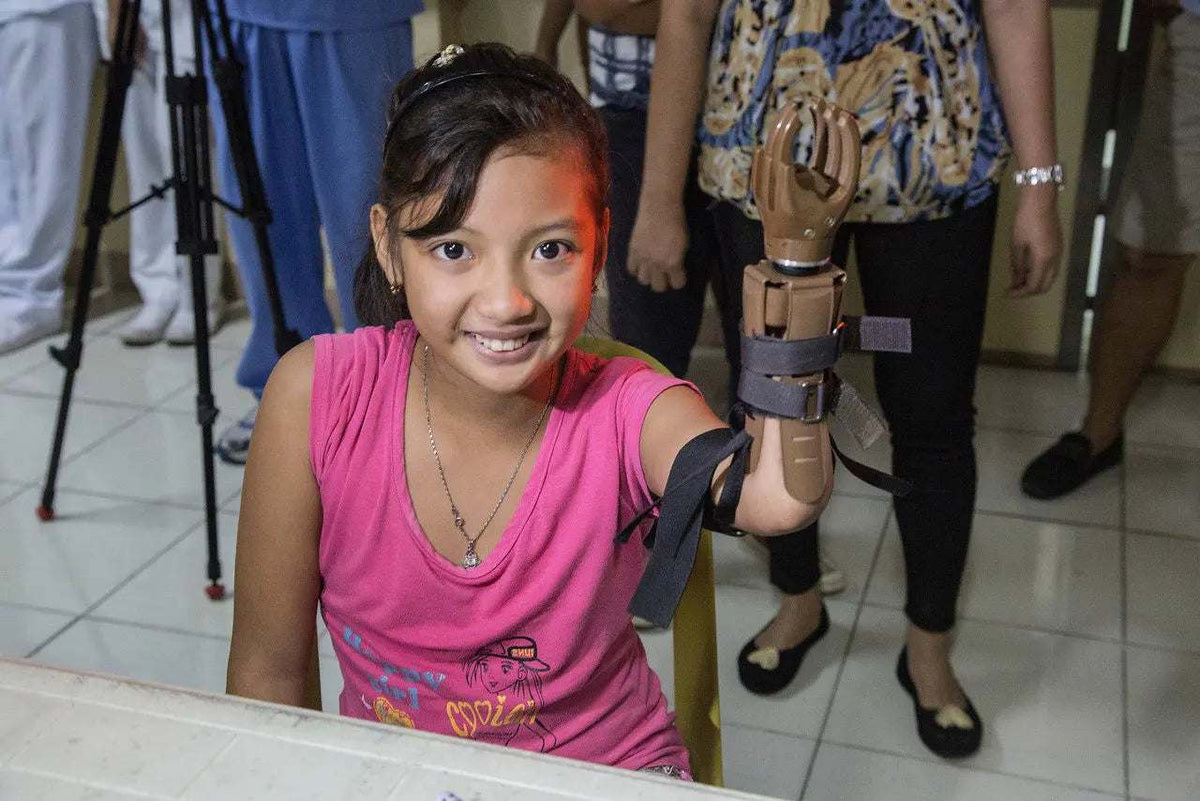
Powerful photographs and distribution stories help organizations see what their participation can support. They can create a meaningful connection between the team-building experience and the people who eventually receive the hands.
That storytelling also carries responsibility.
Recipients should never be presented as props in someone else’s team-building success story. Their lives are larger than the moment they receive a hand. They should be represented as capable individuals with their own agency, relationships, skills, and aspirations.
Responsible Build-A-Hand storytelling recognizes the team’s contribution without making the team the hero of the recipient’s life.
It speaks about possibility rather than making guarantees. It describes the hand as a practical tool rather than a complete solution. It celebrates the network of people involved while respecting that the recipient decides what the hand will mean and how it will be used.
The statement featured in the July report captures the emotional intention behind the work:
“A hand changes more than movement—it restores hope.”
That hope is best understood as possibility: the possibility of approaching a task differently, participating in an activity, exploring a new option, or pursuing a personal goal.
The hand may help open a door. The recipient decides where that door leads.
Why Organizations Choose Build-A-Hand
Organizations do not have to choose between meaningful team development and meaningful social impact. Build-A-Hand brings the two together.
The program can support company meetings, leadership gatherings, team retreats, conferences, onboarding experiences, culture initiatives, and employee engagement events.
Its strength comes from the way purpose is integrated into the work. The social-impact element is not a donation added after an unrelated activity. Participants assemble the hands themselves, help fund them, and understand that the finished devices will be distributed at no cost through the LN-4 Hand Project.
That direct connection makes the experience tangible.
For organizations seeking a stronger sense of purpose, Build-A-Hand demonstrates that values can be practiced. For teams working to improve collaboration, it creates a real task that depends on collective effort. For leaders hoping to create a memorable event, it offers an outcome employees can feel proud of while keeping recipient dignity at the center.
Most importantly, the program gives a team’s time together a destination.
Build a Stronger Team—and Help Build What Comes Next
The July 2026 report shows the reach of a model built on collaboration. In one month, 302 hands were distributed across three countries: 150 in the Philippines, 150 in Ethiopia, and two in Zambia. The cumulative total reached 91,099.
For Odyssey Teams, those numbers are not separate from the team-building experience. They are evidence of where Build-A-Hand can lead.
A group of coworkers begins with individual parts and a shared challenge. They communicate, solve problems, divide responsibilities, and assemble a functional prosthetic hand. Their participation helps fund the hand. The LN-4 Hand Project and its partners continue the journey, distributing it at no cost to a recipient.
The event strengthens the team, but its impact does not stop with the team.
It travels through every hand assembled, every partner who carries the work forward, and every recipient who gives that hand its next purpose.
Build-A-Hand is an opportunity to bring people together around work that matters—to the organization, to the team, and to someone beyond the room.
Give Your Next Team-Building Experience a Purpose That Lasts
Bring your people together to strengthen communication, build trust, and create something with a meaningful destination. Through Build-A-Hand, your team will assemble and help fund prosthetic hands that are distributed at no cost to recipients through the LN-4 Hand Project.
Share:
The Future of Connection: How to Master the 2026 Team-Building Landscape
How to Align Cross-Functional Hybrid Groups: A Strategic Playbook for People Leaders