
Reinventing Team-Building: From Ropes Courses to Life Cycles™
By the spring of 2000, I was beginning to lose my passion for the experiential learning medium that had defined the previous decade. Ropes courses, once novel and groundbreaking, had become synonymous with the overused, diluted term “team-building.” The industry was saturated with poor facilitators, knock-offs, and companies seeking only to check a box rather than invest in real team development.
Ropes courses had become a dime a dozen, lumped into the same category as paintball, scavenger hunts, or karaoke—activities that required no true facilitation or metaphorical thinking by either industry standards or an often-deceived public. It was disheartening to watch the original intent of true team development slip away.
Odyssey Teams continued to deliver high-quality programs, but we were increasingly approached by companies who were only interested in the checkbox, not in the real growth and engagement of their teams. We stayed true to our philosophy, charging for the value we provided and letting the checkbox clients go elsewhere—knowing they would further dilute the medium we had worked so hard to cultivate.
A Look Back at the Origins
I often thought back to the early days—when no one had ever heard of a “ropes course” or “team-building.” In those days, we didn’t need labels; we used activities to create meaningful conversations about leadership, teamwork, and business. By spring 2000, I was entering a creative funk, sharing with my colleagues my desire to explore something entirely different. I considered a career in firefighting, even medical school—anything that could keep me in a position to help people. My team endured countless meetings where I lamented the dilution of the industry and pushed for deeper value rather than chasing cheaper alternatives.
The Call That Changed Everything
One day in the spring of 2000, we received a call from Lucent Technologies. They had a new leader, Jose Mejia, heading their global procurement division, and he was preparing for his first meeting with direct reports from around the world.
My colleague, Lain, took the call and listened carefully to the challenges and objectives Jose was facing. After brainstorming, he proposed something entirely new: building dog houses. I smirked, unsure how this could be leveraged as a training experience, simulation, or metaphor. But Lain sold the idea to the client before he had sold it to me. Clever.
The logistics were simple: 250 participants were broken into teams of ten and given lumber, plywood, hammers, nails, saws, paint, brushes, and two hours to build their creations. But before the hands-on portion, we spent two hours setting context—preparing participants to work creatively, leverage team diversity, manage time and resources, and approach relationships and processes deliberately.
When the building began, what emerged was extraordinary: 25 creative, unique dog houses. Some were on stilts, others had drawbridges, some reflected Tahitian or Victorian styles. We paraded them down our “dog-house streets,” awarding prizes for teamwork, creativity, and engineering.
But, as with all Odyssey programs, the experience itself was never the goal. The debrief was where the magic happened—where lessons were connected to values, behaviors, leadership, and organizational results.
Jose announced that the dog houses would be auctioned for Habitat for Humanity, creating wins for participants, the community, and even the dogs. The success of this event set the stage for something even bigger.
Life Cycles™: The Bicycle Breakthrough
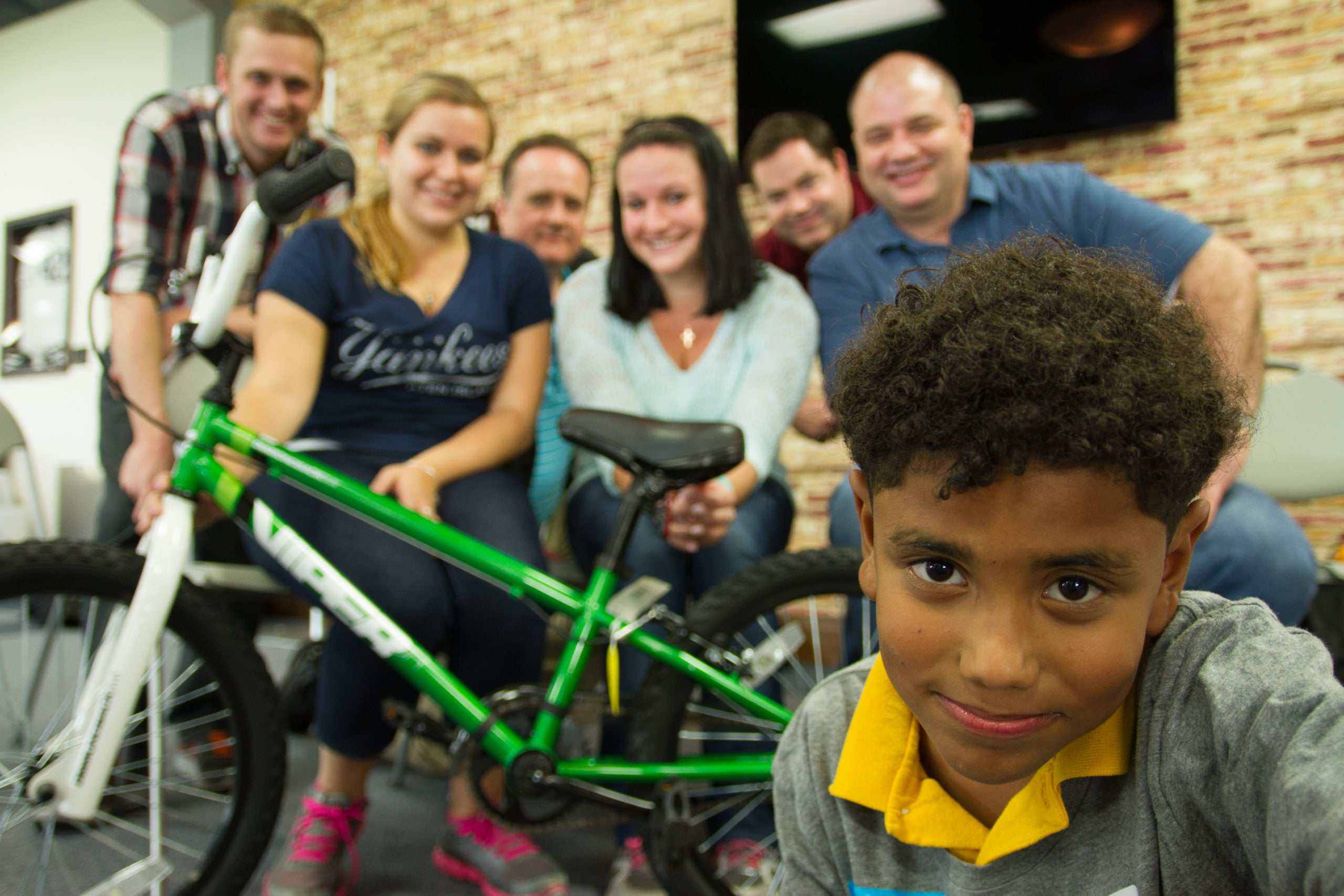
Later that year, Lain proposed building bicycles for Jose’s next meeting in Atlantic City. This time, I began exploring the metaphor in depth: the bike represented product, and as a procurement team, participants would have to share tools and resources, moving beyond silos to leverage the full potential of available parts.
Over Nebraska, inspiration struck: the end-users must see the product come to life. So, I contacted the YMCA and asked them to bring all 50 children who would receive the bikes.
The participants built, the kids waited outside the room, and when the time came, the curtains swung open to reveal the real purpose: every child would receive a bike, helmet, and lock. The participants experienced a profound shift—from seeing their work as an assembly task to realizing the impact their collaboration and creativity had on real lives.
Teams immediately checked brakes, tightened bolts, and adjusted seats. The excitement and empathy were palpable. Participants and children connected, forming lasting memories and insights about teamwork, purpose, and leadership.
The YMCA coordinator shared the deeper meaning behind the program—why these children were chosen and what the bikes represented. Standing ovation. Teams discussed how this experience connected to who they are, what they do, and where they are going.
Lessons Learned
Over the past 20 years, Life Cycles™ has delivered more than 20,000 bicycles to children worldwide, generating transformational learning for thousands of participants. Some of the core takeaways include:
-
The power of purpose—understanding the “why” behind your actions.
-
Committing to quality from the start.
-
Keeping the customer/end-user in mind at every step.
-
Sharing knowledge, tools, and resources instead of competing in silos.
-
Seeing the bigger picture and the impact of your actions.
-
Doing work that benefits the community.
-
Living and demonstrating your values consistently.
For Lucent Technologies, this approach catalyzed over a billion dollars in savings, through streamlined processes, reduced inventory turns, and enhanced collaboration.
Transforming an Industry
Life Cycles™ not only redefined team-building but helped establish the concept of Corporate Social Responsibility (CSR). Participants and organizations realized that giving back could be integrated into experiential learning, creating tangible, measurable impact while developing stronger teams.
Unfortunately, the program was copied. Other companies attempted to replicate Life Cycles™, often reducing it to a simple “build a bike” activity without the metaphor, context, or debrief that makes the program transformative. While we were proud of our innovation, we recognized the risk of dilution.
Rather than hoard the methodology, we chose to teach other companies the process with integrity, while continuing to evolve and push the boundaries of experiential learning.
Pushing the Envelope
Life Cycles™ demonstrated the power of hands-on, purpose-driven team development. It showed that even in a four-hour program, delivered in a simple conference or meeting room, teams could experience profound learning—connecting head, hands, and heart.
The program shifted the industry, raising expectations for what “team-building” could achieve. It showed that experiences should be meaningful, impactful, and connected to real business outcomes, not just activities to fill time.
Life Cycles™ helped define a new standard for experiential programs and CSR, proving that even replicated formats can inspire meaningful engagement when designed thoughtfully.
Conclusion
Odyssey Teams continues to reinvent team-building, demonstrating that it’s not just about activity—it’s about connection, purpose, and transformation. As long as there are organizations that want to create genuine impact, we’ll continue innovating, challenging, and inspiring.
Bill John
Founder, President & CEO
Odyssey Teams, Inc.
Share:
Life Cycles Program: Leadership Lessons in Action
Life Cycles in Team Building: Lessons from Bikes, Tires, and Metaphors