
An organization can have the most advanced AI tech stack, flawless automated tracking, and beautifully optimized workflows—and still feel entirely empty.
We are witnessing a quiet, global corporate collapse. Every day, leaders look at dashboards glowing with green KPIs, automated efficiency metrics, and streamlined project boards, yet wonder why morale is scraping the bottom of the barrel. The truth is uncomfortable: in our relentless pursuit of operational velocity, we have accidentally engineered humanity out of the workplace. If we want to survive the next era of business, we must intentionally pivot toward building a human-centric workplace culture.
By trading relational capital for transactional throughput, the bill has finally come due. The latest Gallup State of the Global Workplace report just dropped a devastating truth: global employee engagement has plummeted to a mere 20%.
This historic disconnect is not just an HR headache or a soft culture problem. It is a macroeconomic disaster, costing businesses a collective $10 trillion in lost productivity annually. Your people haven’t quiet-quit because the work is hard. They have checked out because the human connection has been entirely optimized out of their day.
The Illusion of Efficiency: When the Tech Stack Smothers the Soul
It is easy to see how we got here. The digital transformation era promised that better tools would lead to happier, more autonomous workers. We adopted asynchronous communication platforms to give people their time back. We integrated AI to automate mundane tasks. We implemented algorithmic tracking to ensure fairness and transparency in output.
Instead, we built a digital panopticon.
When every interaction is reduced to a Slack message, a Jira ticket, or a automated notification, work loses its narrative arc. Employees no longer feel like craftsmen or critical thinkers; they feel like data entry points feeding an insatiable machine.
The Cost of Digital Isolation
When human interaction is restricted solely to transactional updates, psychological safety evaporates. Without informal social cues, empathy degrades. A sharp comment on a pull request or an ambiguous email is interpreted through a lens of anxiety rather than benefit-of-the-doubt collaboration.
The resulting isolation breeds detachment. When an employee feels invisible, their commitment to the organization’s mission becomes equally invisible. They stop contributing peripheral ideas, they stop raising flags when projects go off the rails, and they eventually log off mentally long before they submit their formal resignation.

Redefining Agility: Output vs. Alignment
Many leadership teams respond to falling engagement metrics by doubling down on the wrong levers. They introduce more tracking, mandate more status meetings, or launch superficial wellness initiatives that fail to address the root cause.
The Reality Check: True speed and market agility do not come from squeezing more output from an exhausted team. They come from absolute structural alignment and absolute psychological safety.
To build a genuinely resilient organization, leaders must understand the core pillars of a human-centric workplace culture:
1. Absolute Psychological Safety
Coined by Harvard Business School professor Amy Edmondson, psychological safety is the belief that one will not be punished or humiliated for speaking up with ideas, questions, concerns, or mistakes. In an automated, hyper-optimized environment, failure is often penalized by automated metrics.
When teams operate in fear of algorithmic optimization, they play it safe. They innovate less, hide mistakes longer, and conform to the bare minimum requirements. A human-centric culture actively rewards vulnerability, treating missteps as collective data points rather than individual liabilities.
2. Structural Alignment over Micromanagement
When people know exactly why their work matters and how it connects to the broader corporate ecosystem, micromanagement becomes obsolete. Structural alignment means giving teams clear, philosophical guardrails and the autonomy to navigate within them. It replaces constant monitoring with deep trust, allowing employees to own their outcomes rather than just log their hours.
Intercepting the Pattern: The Power of Tactile Experiences
How do we break the cycle of digital numbness? You cannot solve a cultural crisis caused by digital saturation by sending another email, hosting another Zoom webinar, or launching another Slack channel.
You have to interrupt the pattern physically and experientially.
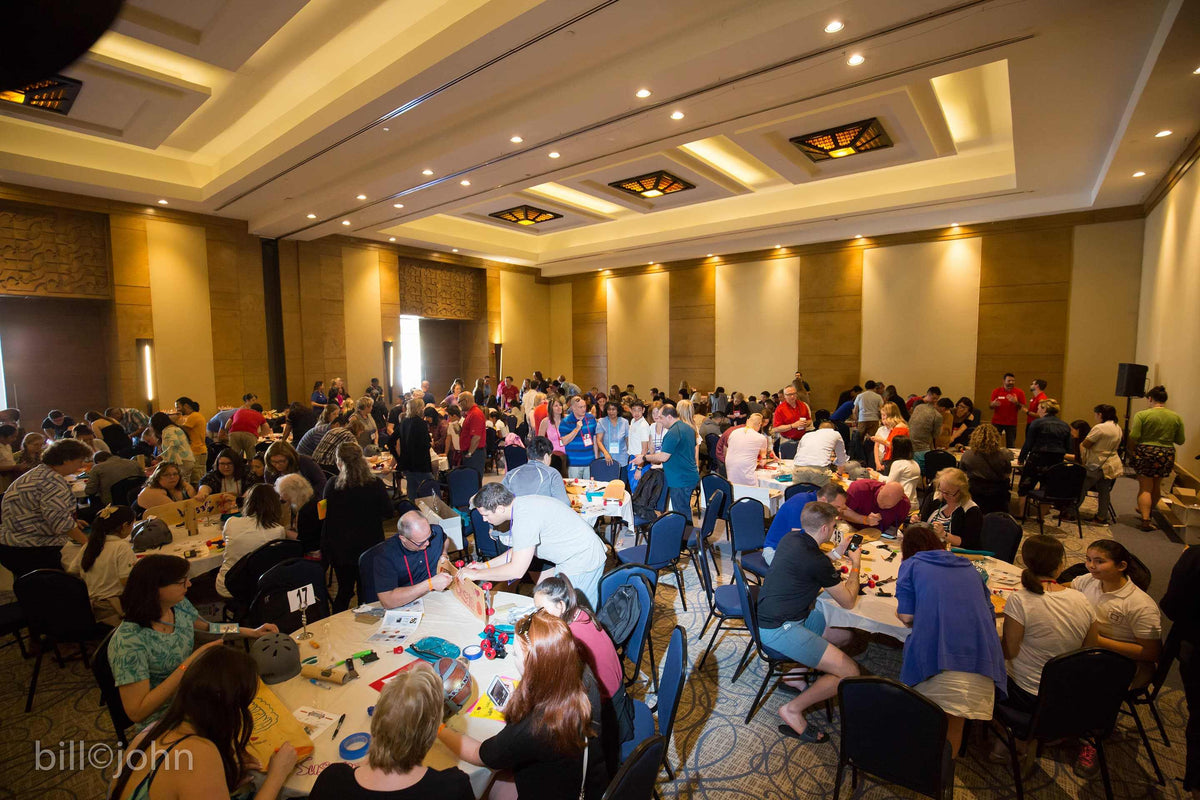
We design premium, tactile experiences that interrupt the patterns disconnected teams fall into. By taking teams out of their screens and forcing them to collaborate using their hands, spatial awareness, and collective problem-solving skills, we bypass the intellectualized defenses that keep corporate silos intact.
Here is how we translate experiential design into deep behavioral shifts that protect your daily bottom line:
The (skate)Board Meeting: Navigating Execution Risk
In business, navigating risk requires agility, calculated vulnerability, and absolute trust in your teammates. In The (skate)Board Meeting, teams step entirely out of their comfort zones to build custom skateboards from scratch.
This experience forces participants to confront the reality of execution risk in real time. It uncovers who rushes ahead without reading the blueprints, who holds back out of fear of failure, and how the team communicates when a physical component doesn’t fit together perfectly. The result? A tangible reminder that complex execution requires synchronized communication and shared accountability.

The Team Mosaic: Bridging Cross-Departmental Divides
Silos are the natural byproduct of a hyper-optimized, digital workflow. Engineering talks to Engineering; Marketing talks to Marketing; rarely do the two genuinely connect.
The Team Mosaic breaks down these operational walls. Disparate departments are tasked with creating individual art panels that, when combined, form a massive, cohesive masterpiece. If one department fails to communicate its scaling, colors, or boundaries, the entire final piece is compromised. This serves as a striking visual metaphor for organizational interdependence, proving that no department can truly win in isolation.

Build-a-Hand: Purpose, Empathy, and Shared Victory
Nothing cures corporate cynicism faster than shared purpose. In our Build-a-Hand workshop, teams collaborate to manufacture life-changing prosthetic hands for recipients across the globe.
This exercise reframes what it means to "deliver a project." It shifts the focus from abstract digital deliverables to real-world, human impact. When your team works together to build a functional medical device for someone in need, they remember what it feels like to win together on a deeply human level. This empathy translates directly back into office dynamics, fostering a collaborative spirit that no software tool could ever replicate.

Moving Beyond Superficial Team Building
Let’s be entirely clear: we don’t offer superficial team building. The corporate world is exhausted by mandatory fun, awkward icebreakers, and performative trust falls that feel disconnected from actual business realities. Those initiatives are band-aids on deep structural fractures.
We facilitate deep behavioral shifts that translate directly back into your daily operations. When a team learns how to communicate through friction during a physical build, they carry that framework back to their digital workspaces. The psychological safety established while working with raw materials transforms how they critique a codebase, pitch a new strategy, or support a colleague under immense stress.

The Ultimate ROI of a Human-Centric Workplace Culture
Investing in human connection is not a luxury or an emotional indulgence—it is a financial imperative. When you consciously build a human-centric workplace culture, the business metrics follow immediately:
-
Drastic Reductions in Turnover: Employees leave managers and disconnected cultures, not companies. Retaining talent saves hundreds of thousands of dollars in recruiting and onboarding costs.
-
Accelerated Innovation Cycles: Teams that feel psychologically safe share ideas faster, experiment more boldly, and bring products to market with greater agility.
-
True Agility: When a crisis hits, a connected team adapts seamlessly because their internal communication channels are built on trust, not bureaucratic protocol.
Step Back from the Machine
Your technology stack should serve your people, not the other way around. If your workflows are pristine but your culture feels completely hollow, it is time to realign your priorities before the quiet collapse claims your organization's productivity.
Let’s step back from the machine and rebuild your cultural foundation from the ground up.
Explore how we can transform your team's dynamics, restore psychological safety, and protect your organizational health. Visit our Live Workshop Portal today to book an experiential strategy session.
Share:
The Anatomy of Trust: Why Your Team Deserves More Than Another Pizza Party
The Future of Connection: How to Master the 2026 Team-Building Landscape