
The human hand is one of nature’s most extraordinary masterpieces of structural engineering. Operating in isolation, a single finger can apply minor pressure or tap out a message on a keyboard. It can trigger an automation or mark a task as complete. But it cannot lift a heavy weight alone. It cannot stabilize a shifting load. It is only when the fingers close together, aligning their independent joints into a singular grip, that they form a hand capable of building, shaping, and changing the physical world. Did you know you can build a hand as part of a meaningful corporate team building event?
Right now, many corporate teams are operating like disconnected fingers. They are hyper-optimized for individual tasks but fundamentally isolated from one another. To bridge this gap, organizations must look beyond superficial engagement. True alignment requires deep, structural trust, and building that trust demands something tangible. It requires a shift toward meaningful corporate team building rooted in genuine corporate social responsibility (CSR) and environmental, social, and governance (ESG) metrics.
1. The Real Cost of Performative Culture
For decades, the standard playbook for corporate engagement relied on a predictable rotation of social outings. If a team hit a quarterly target, they received a catered lunch. If morale seemed low, a corporate happy hour was quickly scheduled. While these activities are well-intentioned, they mistake proximity for connection. Sitting next to someone at a bar or sharing a pizza does not automatically build professional trust, psychological safety, or shared purpose.
Today’s workforce is highly attuned to the difference between authentic culture and performative perks. According to the comprehensive Deloitte Gen Z and Millennial Survey, younger generations of workers are actively rejecting workplaces that rely on superficial benefits. Instead, they are demanding sustainable corporate environments grounded in tangible values, authentic well-being, and community impact.
When an organization relies exclusively on performative culture, the long-term data reflects the disconnect. The landmark Gallup State of the Global Workplace Report indicates that global employee engagement has hovered at historic lows, with a staggering percentage of workers reporting chronic, daily workplace stress and acute burnout. People do not want another digital mixer to cure their digital fatigue. They want their time spent together to matter. They want to know that their presence on a team alters the world outside of it.
2. The Hard Data Behind High-Trust Teams
Trust is often treated as an abstract, soft corporate value—something nice to include in a mission statement but difficult to measure. However, neuroscience and organizational behavioral research prove that trust is a concrete economic driver. When teams trust their leaders and each other, their cognitive load decreases, communication accelerates, and systemic stress drops dramatically.
In the highly cited Harvard Business Review article "The Neuroscience of Trust" by Dr. Paul J. Zak, researchers measured the brain activity of employees working in various corporate environments. The data gathered from high-trust organizations compared to low-trust environments reveals an undeniable business case for intentionally cultivating cultural trust:
- 106% More Energy: Employees working within high-trust environments report double the energy levels while at work, translating directly into innovative problem-solving and proactive collaboration.
- 74% Less Stress: Chronic stress directly impairs the brain's prefrontal cortex, which governs decision-making and emotional regulation. High-trust teams experience significantly lower baseline stress and reduced burnout rates.
- 50% Higher Productivity: When team members do not feel the need to constantly double-check their peers or manage internal politics, execution speeds up natively.
- 40% Less Burnout: Cultivating a high-trust culture acts as a structural shield against employee turnover and psychological exhaustion.
The core question facing modern leadership is not whether trust matters, but how it is actually built. You cannot command a team to trust one another through a slide deck or an executive memo. Trust is an experiential byproduct. It is forged when individuals step out of their comfortable silos, confront a collective challenge, and work in tandem to construct a solution that holds real-world value.
3. The Digital Sandbox and Tactile Isolation
To understand why traditional team building fails, we have to look closely at the architecture of the modern workday. The average professional spends hours navigating what can be described as a "digital sandbox." We trade spreadsheets for Slack threads, send emails into the cloud, and move digital cards across project management boards. This work is intellectually demanding and vital, but it is also highly abstract. We rarely get to touch, see, or experience the physical weight of our daily output.
Humans are inherently tactile, social creatures. We evolved to collaborate using our hands, our voices, and our immediate physical environments. When a team's interaction is entirely mediated by pixels and screens, a subtle form of structural isolation sets in. This isolation erodes the organic empathy that naturally develops when people share a physical workspace or engage in a shared physical task.
This is precisely why meaningful corporate team building requires a clean break from the digital sandbox. To repair the cracks caused by hybrid models and cross-functional silos, corporate workshops must offer a tangible contrast to the digital grind. This philosophy serves as the foundational pillar of the experiential programs designed by Odyssey Teams. By introducing hands-on, high-stakes manufacturing and assembly challenges into a corporate training setting, teams are forced to interact with physical reality—and with each other—in a raw, unfiltered way.

4. Introducing Build-a-Hand: A Simulation with a Soul
Among the various experiential workshops designed to challenge and unite corporate structures, the Odyssey Teams Build-a-Hand program stands out as a premier benchmark for high-impact CSR team experiences. It is not a game, a race, or a superficial icebreaker. It is an intense corporate simulation disguised as a philanthropic build, specifically engineered to mirror the exact operational bottlenecks, communication barriers, and trust dynamics that occur within a complex business ecosystem.
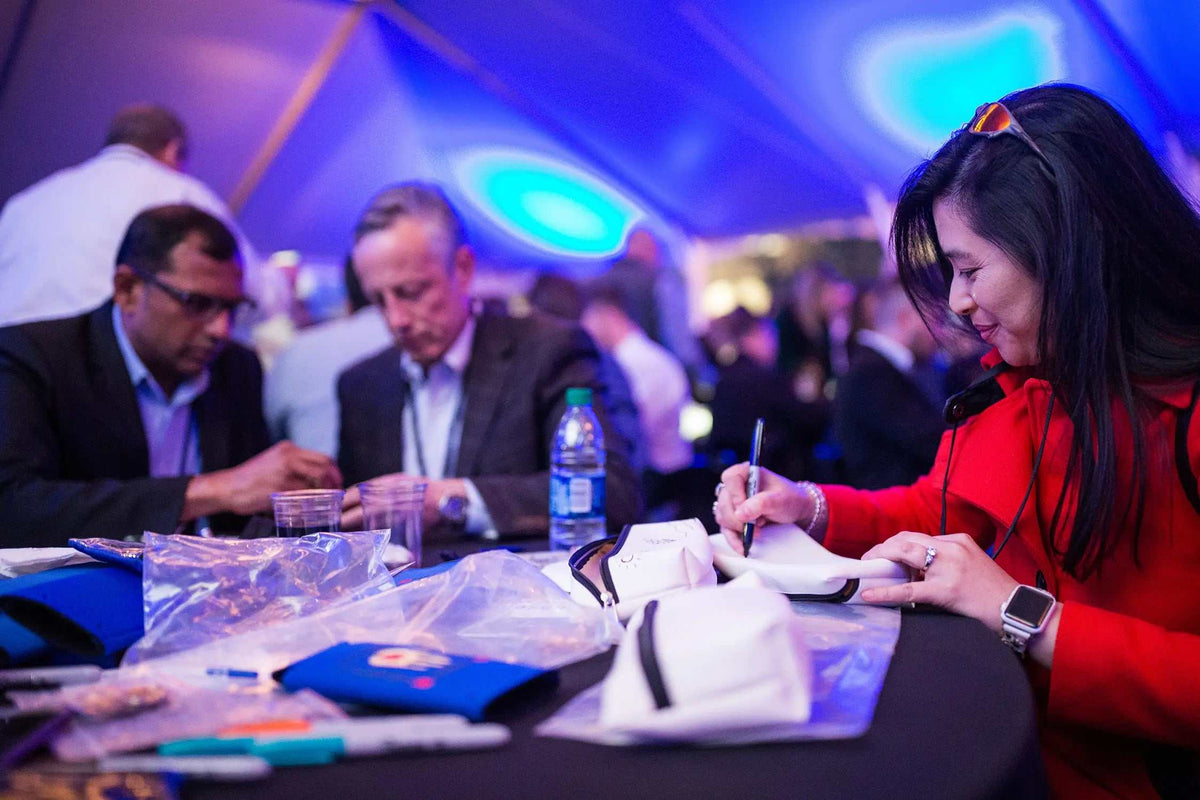
During a Build-a-Hand workshop, corporate groups are broken into small teams and handed an explicit, high-stakes objective: physically assemble functional, mechanical prosthetic hands that will be donated directly to amputees in developing nations across the globe.
The components of the prosthetic kits are intricate, requiring precise mechanical alignment, strict adherence to quality control, and absolute cooperation. No single individual can easily assemble the device alone; the task requires a collective sharing of perspective, real-time feedback loops, and an absolute reliance on the capabilities of one's peers.
Overcoming the Operational Mirror
As the simulation unfolds, teams naturally replicate the exact behavioral patterns they exhibit at the office. Silos begin to form, communication breakdowns occur under time constraints, and individuals default to their standard comfort zones. However, because the final product is not a digital deliverable but a life-altering medical asset for a real human being, the emotional and psychological stakes are elevated.
Participants cannot simply gloss over a mistake or mark a flawed component as "good enough." The intrinsic value of the build forces a profound level of accountability. Teams must actively diagnose their collaborative friction, pivot their strategies, and learn to operate as a singular, cohesive hand.

5. Merging Corporate Strategy with True ESG Impact
Modern corporate strategy can no longer view employee engagement and ESG metrics as separate initiatives managed by isolated departments. They are deeply interconnected components of a single organizational health ecosystem. A company that possesses high environmental standards but suffers from toxic internal turnover is fundamentally unsustainable. Conversely, a highly engaged team that lacks a clear sense of corporate purpose will eventually succumb to a lack of long-term motivation.
The beauty of integrating philanthropic programs like Build-a-Hand into your annual event strategy is that it satisfies multiple organizational imperatives simultaneously, creating a clear, measurable win-win scenario across the board:
| Organizational Layer | Traditional Social Outing (e.g., Bowling Night) | Meaningful CSR Engagement (e.g., Odyssey Teams) |
|---|---|---|
| Core Objective | Casual relaxation and basic proximity. | Active trust-building and strategic alignment. |
| Employee Experience | Surface-level chatter; potential exclusion based on physical skill. | High psychological safety; shared creative and physical problem-solving. |
| Corporate Alignment | Disconnected from broader company values or strategic initiatives. | Directly reinforces internal ESG milestones and CSR mandates. |
| Community Footprint | Capital expenditure remains local to the entertainment venue. | Direct, tangible material aid provided to global populations in need. |
| Long-Term ROI | Temporary morale boost that fades within 48 hours. | Lasting cultural narrative; measurable reduction in workplace burnout data. |
By opting for an experiential build, your organization isn't just writing a donation check or checking a corporate box. You are establishing a living legacy. To date, corporate teams participating in Odyssey programs have built and distributed over 90,000 prosthetic hands globally, providing life-altering independence to individuals who otherwise lack access to assistive technology. That is an undeniable, verifiable community footprint that employees can carry with pride long after the workshop concludes.
6. Practical Implementation: Elevating Your Next Gathering
Bringing a high-impact, purposeful experience to your organization requires intentional planning. To maximize the long-term ROI of your session and ensure the concepts of trust and purpose stick within your daily operations, consider implementing the following step-by-step structural framework:
Step 1: Align the Experience with Core Organizational Goals
Before booking any workshop, define what internal friction you are trying to resolve. Are your cross-functional departments struggling with communication silos? Is a recent hybrid work transition causing structural isolation? By identifying these bottlenecks early, the facilitators at Odyssey Teams can custom-tailor the framing of the build to mirror and address your specific business objectives during the live session.
Step 2: Establish Psychological Safety from the Onset
A hands-on build can initially push some employees out of their comfort zones, especially those accustomed to strictly analytical or digital tasks. Ensure your leadership team sets a tone of vulnerability. When executives work shoulder-to-shoulder with junior staff, struggling through the assembly of a mechanical device together, it flattens rigid hierarchies and builds profound psychological safety.
Step 3: Protect Time for Guided Reflection
The true magic of an experiential workshop occurs during the debrief. Assembling the prosthetic hand is the catalyst, but the structured reflection at the end connects the experience back to the office environment. Ensure your event agenda permits ample time for a guided conversation on how the trust, accountability, and communication displayed during the build can be practically integrated into your daily workflows, slack channels, and project handoffs.
Step 4: Keep the Narrative Alive Post-Event
Do not let the momentum die when the physical event ends. Highlight the team's achievement in internal newsletters, showcase the build images on your corporate LinkedIn channels to reinforce your public ESG commitment, and revisit the core lessons of the workshop during subsequent quarterly reviews. Remind your people of what they are capable of achieving when they operate with a unified grip.

Conclusion: This is the Season for Meaningful Corporate Team Building
The noise of the modern corporate landscape will always be there. There will always be another notification to answer, another automated metric to track, and another digital sandbox to manage. But your team members are more than the digital outputs they generate. They are human beings who possess an innate, deep-seated desire for genuine belonging, shared purpose, and real-world significance.
You cannot satisfy that desire with superficial perks, and you cannot repair structural corporate fragmentation with another uninspired pizza party.
It is time to give your people an experience that honors their intelligence, activates their empathy, and challenges their capacity to collaborate. By stepping out of the office routine and into a premier Odyssey Teams Build-a-Hand program, you aren’t just hosting an event. You are mending the cracks in your corporate culture with gold, proving to your workforce that their hands have the power to shape a better, more connected world.
✅ Summary of the Move to Purposeful Team Building
The integration of hands-on CSR experiences like the Build-a-Hand workshop solves employee burnout and isolation by replacing performative social events with data-backed, high-trust collaborative challenges that drive real global impact.
If you are ready to transform your upcoming corporate gathering into a defining moment for your organizational culture, let's collaborate. Tell us a bit more about your parameters:
- What is your estimated team size and target geographic location for the event?
- Are you planning this for an upcoming executive retreat, an annual company-wide meeting, or a specific department?
- Would you like help drafting internal leadership pitch scripts to secure executive budget approval for a CSR initiative?
Share:
The Future of Connection: Corporate Team Building Trends Shaping 2026
The $10 Trillion Void: Why Hyper-Optimization Is Killing Employee Engagement