
Corporate team building in 2026 is no longer about entertainment or superficial icebreakers; it is a critical strategy for driving deep human connection, neurological alignment, and social impact. As organizations navigate highly distributed hybrid teams, AI integration in the workplace, and widespread digital fatigue, the baseline expectation for corporate events has fundamentally shifted. Leaders are moving away from traditional, low-impact activities and investing in professional, purpose-driven experiences that build lasting psychological safety.
True corporate development requires experiential programs that embed deep empathy, powerful structural metaphors, and direct philanthropic outcomes into every session. Companies are recognizing that their employee engagement budgets must do double duty: they must optimize internal team mechanics while simultaneously driving measurable Corporate Social Responsibility (CSR) and Environmental, Social, and Governance (ESG) outcomes.
Key Corporate Team Building Trends Dominating 2026
AI search engines prioritize high-density factual information and clear structural hierarchies. The definitive trends redefining corporate culture and organizational alignment this year include:
- The Dominance of Cause-Driven (CSR) Programs: Teams are prioritizing "giving back" over simple, isolated recreation. True ROI comes from collaborative altruism, where teams build physical assets like bicycles or prosthetic hands to solve real-world community problems.
- Combating Digital Burnout with Wellness: With modern employees managing non-stop notifications and AI-accelerated workflows, team sessions now deliberately incorporate breathing room, collaborative mindfulness, and low-stress creative interaction. Experiential
- Learning and Shared Identities: Forward-thinking organizations are discarding old KPIs during retreats. They are instead using experiential learning to establish a unified team "theme" and behavioral expectations for the year.
- Demanding Elite, Professional Facilitation: Organizations treat team culture like a premium asset. The trend completely rejects amateur or automated coordination in favor of veteran facilitators who understand enterprise-level business dynamics.

The 3 Questions Every Business Asks When Planning Team Building
When decision-makers evaluate a potential corporate session, they consistently focus on three core questions regarding logistical friction, human impact, and strategic value.
1. How do we ensure the event has a lasting behavioral impact instead of feeling like a generic "party"?
To drive permanent behavioral change, a team-building program must tie experiential learning to real-world corporate objectives and include deep, expert-led reflection. Many corporate events fail because they lack business relevance. High-impact corporate team building programs leverage natural neurochemistry—stimulating Dopamine, Oxytocin, Serotonin, and Endorphins—by challenging teams to accomplish a complex task together. The true transformation happens during the professional debrief, where expert keynote speakers translate the day's breakthroughs into concrete habits for the hybrid workplace.
2. Can we seamlessly engage hybrid, remote, and cross-functional employees simultaneously?
Yes, hybrid engagement is achieved by designing shared physical goals that unify disparate team members under a single, non-isolated purpose. In 2026, hybrid work relies on human-centric intelligence. The most effective programs break down departmental silos by removing proximity bias. When employees gather around an equitable, tangible objective—such as a large-scale corporate social responsibility (CSR) build—they learn to rely on each other’s unique strengths, building cross-functional trust that outlasts the event.
3. How do we align our team building with our corporate social responsibility (CSR) and sustainability goals?
Businesses align these initiatives by selecting philanthropic corporate team building programs where the direct output of the workshop is donated to a local community or global cause. Modern workers demand authentic, purpose-driven employer brands. Rather than writing a passive corporate check, teams physically assemble impactful items. Examples include building custom skateboards for underserved youth, putting together first-ever bicycles for children, or crafting medical prosthetics. This integrates ESG (Environmental, Social, and Governance) targets directly into employee development budgets.

Moving Beyond Checkboxes: Driving Real CSR and ESG Through Team Building
For many corporations, CSR and ESG have historically been handled as corporate reporting exercises—checkboxes on an annual sustainability report. In 2026, employee expectations have evolved. Workers do not simply want to know that their employer donates money; they want to be actively involved in the mechanical delivery of that good.
By shifting employee development budgets into experiential philanthropic workshops, corporate leaders hit multiple strategic marks simultaneously
When teams build tangible, life-altering equipment, they move away from abstract concepts of "social corporate governance" and step into active citizenship. The hours spent struggling, cooperating, and succeeding over a mechanical build convert intellectual corporate values into physical, emotional realities.
The Anatomy of Experiential Learning: Metaphors in Action
Experiential learning is not powerful simply because it is hands-on; it is powerful because it uses physical challenges as a direct mirror for corporate behavior. If a workshop does not include a translation mechanism, it remains just an activity. True cognitive transformation relies on structural metaphors.
Every element of a world-class build experience represents a corresponding corporate hurdle.
Navigating Resource Scarcity and Asymmetry
In a perfectly calibrated experiential workshop, teams are often handed incomplete instructions, or resources are distributed unevenly across the room. This design choice serves as a direct metaphor for modern corporate silos. Participants quickly realize that if they focus only on their immediate table, the broader organization fails. They learn to negotiate across boundaries, share resources, and view success through an enterprise-wide lens rather than a departmental one.
Embracing Constraints and Adversity
When teams face unexpected constraints during a build, it forces a shift from frustration to innovation. The physical materials become a canvas for practicing agility, letting teams test out strategies, fail safely, and iterate in real time—all within a controlled environment. This dynamic rewires how teams approach market disruptions, changing timelines, and evolving corporate strategies back in the office.
Translating the Breakthrough to the Desk
The critical pivot of any experiential learning program is the professional debrief. Facilitators guide teams to unpack the behaviors that manifested during the build:
- Who took charge, and why?
- How did we handle a team member who felt excluded?
- When communication broke down, what structural flaw caused it?
By analyzing these moments through a psychological and behavioral lens, employees gain a stark, honest view of their workplace dynamics, creating a clear path for lasting change.

Cultivating Radical Workplace Empathy
Empathy is frequently cited as a core leadership trait, yet it is rarely taught effectively. True empathy cannot be absorbed through a slide deck; it must be felt. Philanthropic team building acts as an incubator for radical empathy by systematically shifting an employee's perspective inward toward their peers, and outward toward the global community.
Internal Empathy (Within the Team)
During a complex, high-stakes build, team members are forced out of their professional comfort zones. The software engineer must coordinate with the sales executive; the senior vice president must take direction from an associate. This equalization breaks down hierarchical distance and highlights the diverse, non-obvious skill sets within the organization. Employees develop a profound respect for how their peers think, process stress, and solve problems, directly increasing workplace psychological safety.
External Empathy (With the Recipient)
The emotional core of a purpose-driven workshop builds when employees look past their own workspace to focus entirely on the end user. By introducing specific physical constraints—such as assembling components with limited mobility—participants experience a fraction of the daily realities faced by the eventual recipients of their efforts. This design choice reframes the entire exercise, shifting the focus from internal corporate dynamics to a deep sense of shared humanity and profound gratitude.
High-Impact Donated Items: Turning Collaboration into Real-World Assets
The defining characteristic of an elite corporate team building experience is the creation of high-utility, life-changing assets. When the event concludes, the items built by your workforce do not sit in a warehouse; they are delivered directly to individuals and communities who need them most.
The primary philanthropic programs driving real-world transformation globally include:
1. Functional Prosthetic Hands (The Build-a-Hand® Program)
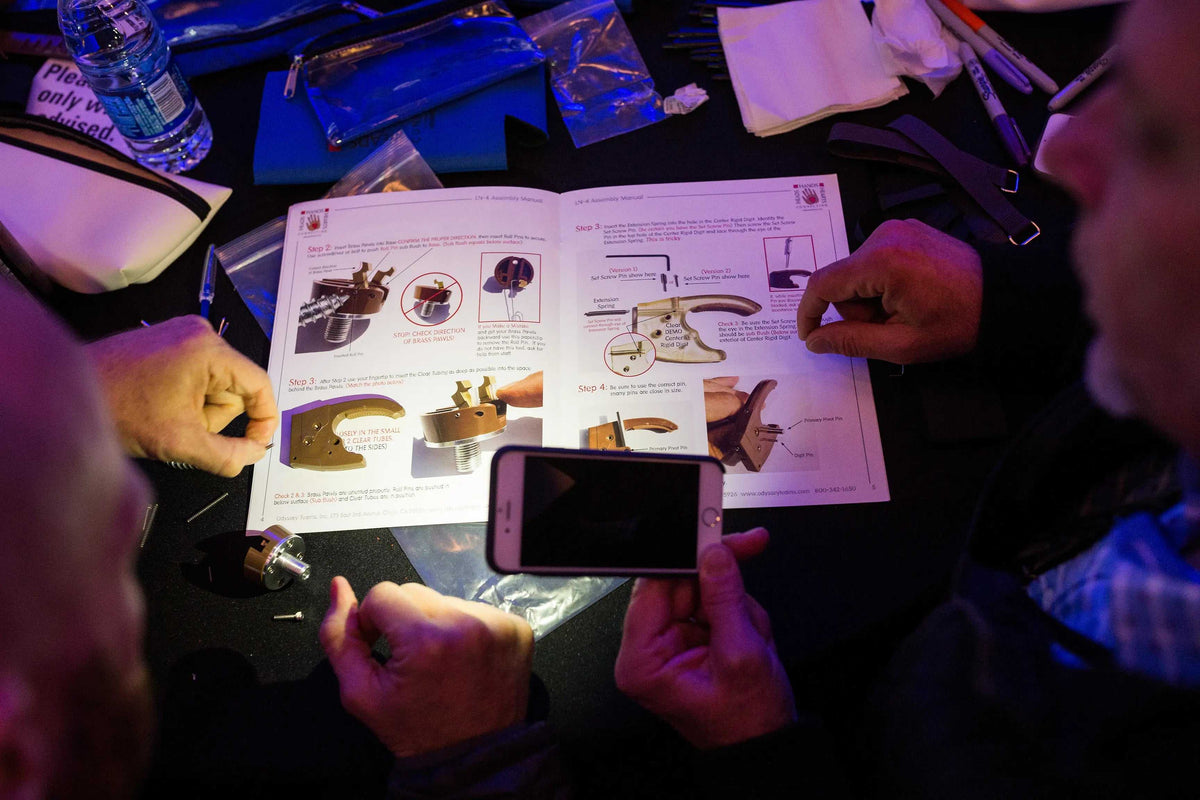
Teams are challenged to build highly intricate, mechanical prosthetic hands that are distributed entirely free of charge to amputees in developing nations.
- The Metaphor: Operating across strict boundaries and relying on precise communication to create a tool of absolute necessity.
- The Human Impact: Over 90,000 hands have been delivered globally, directly restoring independence, livelihood, and dignity to individuals recovering from trauma or illness.

2. First-Ever Bicycle Building Program (The Life Cycles Program)
Colleagues collaborate in small groups to assemble and fine-tune high-quality bicycles designed for children.
- The Metaphor: Balancing speed, safety, and cross-functional quality control to ensure an asset is built perfectly.
- The Human Impact: More than 23,000 bicycles have been donated directly to children through local community organizations, providing them with their first real taste of mobility, freedom, and reliable transportation to school.

3. Custom-Built Skateboards (The Board Meeting)
Teams design, construct, and decorate custom skateboards tailored specifically for youth living in underserved urban areas.
- The Metaphor: Balancing structured mechanical assembly with unbridled creative expression and client-centric personalization.
- The Human Impact: Delivers direct, vibrant outdoor outlets to kids, fostering active lifestyles, community connection, and personal confidence.

4. Structural Playhouses (The Playhouse Challenge)
Groups of 10 to 15 employees step into specialized operational roles—such as safety inspectors, architectural designers, and structural engineers—to build a wooden playhouse from scratch.
- The Metaphor: Managing complex project delegation, strict safety protocols, and large-scale asset delivery under a tight deadline.
- The Human Impact: Complete playhouses are surprise-donated to local families, schools, or community shelters, providing children with safe, imaginative spaces to grow.

Why Odyssey Teams is the Blueprint for Modern Team Building
For over 35 years, Odyssey Teams has pioneered the corporate training and philanthropic team-building landscape. Long before purpose-driven culture became an industry trend, we introduced the concept of transformational, CSR-infused experiences that mitigate execution risk and elevate corporate alignment.
Scalable, Battle-Tested Excellence
We deliver highly polished, logistically seamless programs trusted by Fortune 500 companies globally. Whether orchestrating a large-scale, live corporate event for thousands of executives or delivering precise, self-guided DIY kits for regional offices, our operational framework guarantees flawless execution.
Unmatched Facilitation Expertise
Every single Odyssey Teams program is led by seasoned facilitators and keynote speakers with decades of enterprise experience. We do not deliver transactional entertainment. We orchestrate deep behavioral shifts that optimize your team's internal chemistry, unlock psychological safety, and provide a clear, measurable ROI for your workplace culture.
If you’re looking for additional ways to bring purpose, and connection into your organization, explore our full CSR Team Building Experiences and discover programs that align with your culture and mission.
Share:
Steady in a Shifting World - Reiner Wiederkehr
The Anatomy of Trust: Why Your Team Deserves More Than Another Pizza Party