
Community Service-Based Team Building Helps Your Company's Image
Whether you're a supervisor, manager, or company owner, you're probably always on the lookout for new ways to open up lines of communication and build better teams. And let’s be honest—team building can sometimes feel repetitive. Trust falls, icebreakers, and offsite retreats have their place, but they don’t always leave a lasting impression. What if your team-building efforts could not only strengthen collaboration but also create a tangible impact in the world outside your office walls?
That’s where community service-based team building comes in.
There are a multitude of team building games, activities, and seminars to take advantage of, but if you want to inspire your team to greatness, there is nothing better than community service-based team building experiences. These activities—sometimes called philanthropic team building—not only help you open up lines of communication and build better teams, but they also make a difference in your community and inspire employees to work harder for the greater good.
When employees see that their efforts contribute to something larger than themselves, they feel more connected to their work, their colleagues, and their company’s mission. In fact, studies show that employees who participate in purpose-driven activities report higher levels of engagement, loyalty, and satisfaction. For companies, this translates into stronger retention, a more positive reputation, and a culture that attracts top talent.
Why Community Service-Based Team Building Works
Traditional team building often focuses on hypothetical scenarios or simulated challenges. While these can be useful, they don’t always carry the emotional weight needed to spark lasting change. Community service-based team building, on the other hand, places employees in real-life situations where their actions directly affect others.
This shift in context does three powerful things:
- It makes teamwork meaningful. Employees aren’t just solving puzzles or role-playing—they’re building something that will change someone’s life.
- It builds empathy. By stepping into the shoes of those in need, employees develop compassion and perspective that strengthens workplace relationships.
- It enhances company image. When organizations are seen giving back, they’re perceived as socially responsible, trustworthy, and aligned with values that matter to customers and communities alike.
Examples of Community Service-Based Team Building Experiences
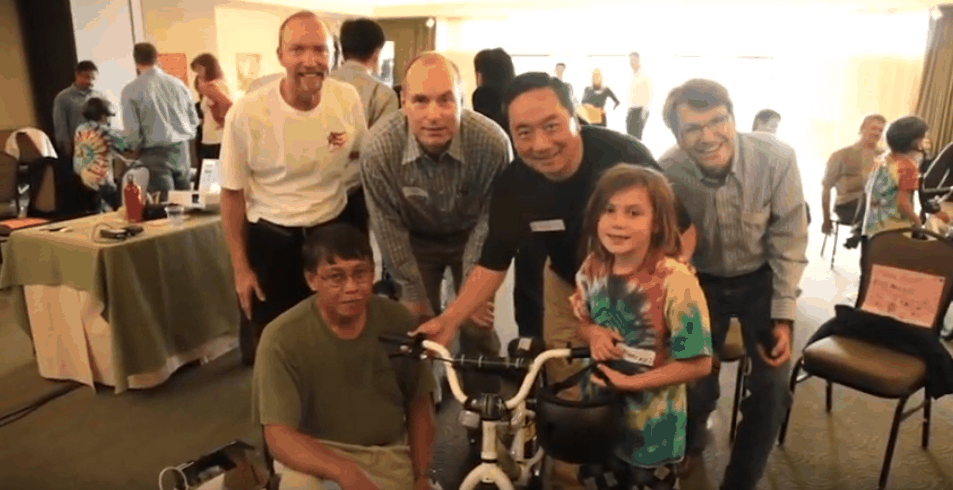
Building Bikes for Kids with Life Cycles
Life Cycles is a philanthropic team building activity that asks employees to work in small groups to assemble bicycles for children in need. Communication is enhanced as team members get to know one another in a different situation.
The real magic happens at the end: after working together and enhancing communication skills, team members are floored when children from local Boys and Girls Clubs—who will receive the bikes—are brought out. The moment of surprise and gratitude is unforgettable.
Impacts of this type of event include:
- Bridging gaps between businesses and communities.
- Making a visible, immediate impact on a child’s life.
- Elevating employee pride by showing them the results of their teamwork.
- Reinforcing the idea that collaboration leads to tangible outcomes.
Employees often leave with tears in their eyes, realizing that their teamwork has created joy and opportunity for a child who might not otherwise have access to something as simple—and life-changing—as a bicycle.
Constructing Playhouses with the Playhouse Challenge
Odyssey Teams’ Playhouse Challenge brings together groups of 10 to 15 employees to construct and decorate a five-foot tall playhouse. The teams are assigned task roles such as safety inspector, designer, and engineer.
A few hours later, after the playhouses are built, the recipients—often families, schools, or community organizations—surprise the teams. The joy of giving and receiving creates a shared emotional experience that bonds employees in ways no seminar could replicate.
Benefits of the Playhouse Challenge include:
- Providing real-life experience to motivate employees.
- Offering rewarding and unifying tasks that teams can later draw upon in their work.
- Enhancing communication, teamwork, and problem-solving through hands-on collaboration.
- Creating a sense of accomplishment that extends beyond the workplace.
The Playhouse Challenge is particularly effective because it blends creativity with responsibility. Employees must plan, design, and execute together, mirroring the dynamics of workplace projects—but with the added reward of seeing their efforts brighten someone’s day.
Assembling Prosthetic Hands with Helping Hands
Helping Hands is a community service-based team building activity with far-reaching effects. Teams are broken into groups of four, and each member has a hand bound behind their back to simulate the experience of being an amputee.
The employees then collaborate to assemble an LN-4 prosthetic hand, which is donated to an amputee in a developing country who would not otherwise be able to afford this costly medical device. To date, Odyssey Teams has donated over 50,000 prosthetic hands.
Benefits of Helping Hands include:
- Realizing that all work has meaning and purpose.
- Drawing parallels between the end user and the effort required to create the product.
- Enhancing communication and problem-solving when a real person’s life is at stake.
- Building empathy by experiencing physical limitations firsthand.
This activity is transformative because it forces employees to confront challenges in a visceral way. They not only learn to collaborate under constraints but also walk away knowing their efforts have restored mobility and dignity to someone across the globe.
Long-Term Organizational Benefits
Community service-based team building isn’t just about the immediate impact—it creates ripple effects that benefit organizations for years to come.
- Employee Retention: When employees feel their company cares about more than profit, they’re more likely to stay.
- Leadership Development: These activities often reveal hidden talents and leadership qualities in employees who might not shine in traditional settings.
- Brand Image: Companies that give back are seen as trustworthy and socially responsible, which strengthens customer loyalty.
- Culture of Purpose: When service becomes part of team building, it reinforces a culture where meaning and mission drive performance.
In a competitive marketplace, these benefits can be the differentiator that sets your company apart.
Conclusion: Be the Company That Gives Back
Community service-based team building is more than an activity—it’s a philosophy. It’s about recognizing that the strongest teams are built not just through communication exercises but through shared purpose and impact.
When employees see the direct results of their collaboration—whether it’s a child riding a bike, a family receiving a playhouse, or an amputee regaining mobility—they understand that their work matters. That realization fuels motivation, strengthens bonds, and elevates company culture.
So, whether you’re a supervisor, manager, or company owner, consider making your next team-building event one that leaves a legacy. Inspire your team to greatness by giving them the chance to serve.
For more information on community service-based team building events, give Odyssey Teams a call at (800) 342-1650 or send a quick email.
Share:
Team Management Skills That Build Trust Quickly
Schneider Electric Strengthens Leadership Through Corporate Team Building Program